
Calcium Buildup on Pool Tiles: Professional Solutions for a Pristine Look
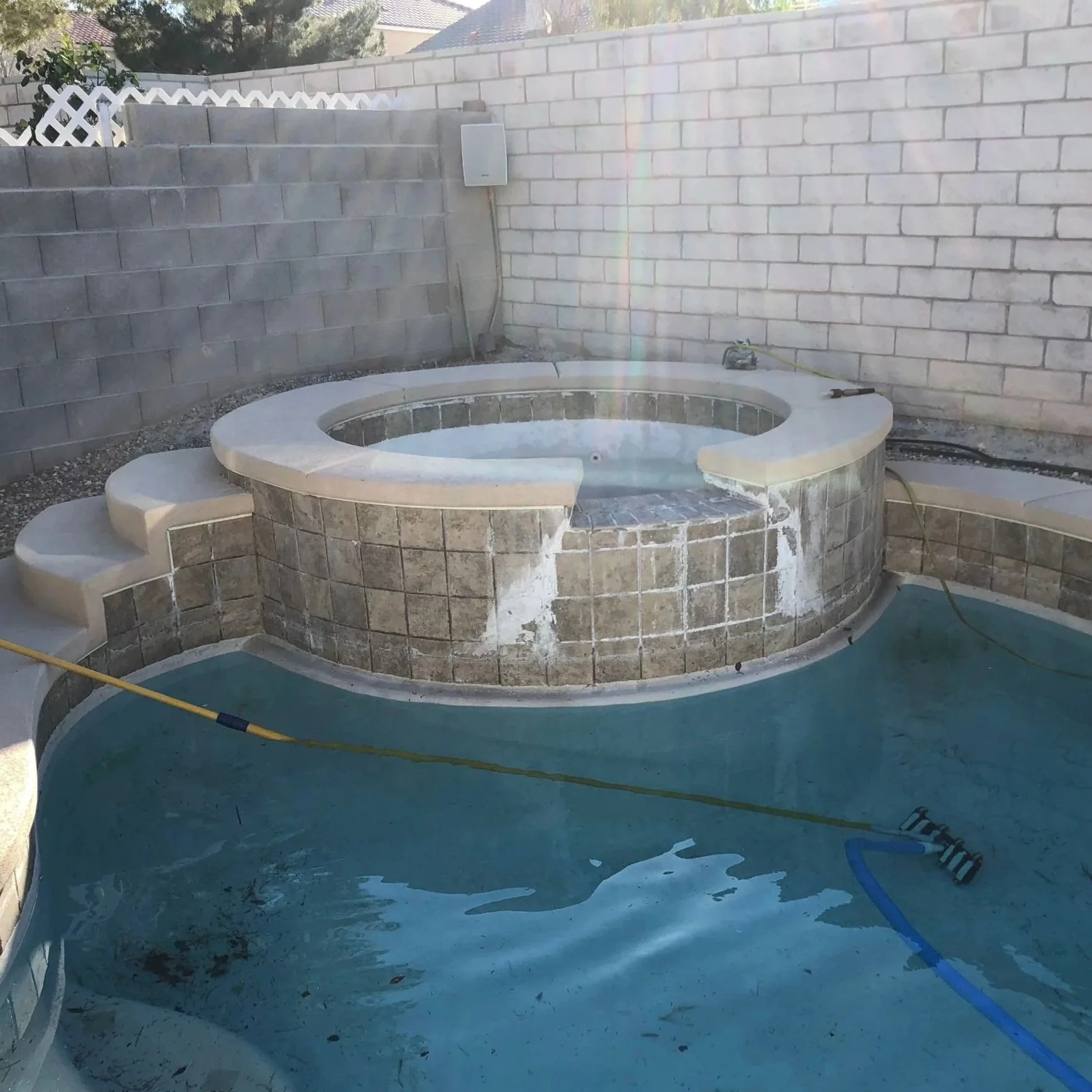
By the time most homeowners take a closer look, the tiles that once framed their pool with a clean, crisp finish now look dull, rough, and neglected.
Pool owners across Las Vegas, Nevada, and the surrounding desert know the look all too well. What starts as a faint white line along the waterline slowly turns into thick, chalky scaling that refuses to scrub away. Calcium deposits creep in quietly, often dismissed as a cosmetic annoyance at first, until they harden into something far more stubborn. By the time most homeowners take a closer look, the tiles that once framed their pool with a clean, crisp finish now look dull, rough, and neglected.
Calcium deposits form as a natural result of mineral-rich water interacting with heat, evaporation, and pool chemistry. In desert climates like Las Vegas, Phoenix, and Tucson, evaporation happens fast. As water evaporates, minerals stay behind, bonding to tile surfaces layer by layer. Over time, these deposits become dense and difficult to remove without damaging the tile itself. Addressing calcium buildup properly means understanding how it forms, how it affects pool surfaces long term, and why professional solutions protect both appearance and tile integrity.
Why Calcium Deposits Form Along Pool Tiles
Calcium buildup does not happen overnight. It develops gradually as water chemistry, evaporation rates, and surface materials interact. Hard water contains dissolved calcium and other minerals. When pool water evaporates, those minerals remain behind and settle along the waterline where evaporation happens most consistently. In hot, dry environments like Las Vegas, this cycle repeats daily, accelerating buildup compared to milder climates.
Tile surfaces provide an ideal place for calcium deposits to attach. Porous grout lines and textured tile finishes give minerals tiny anchor points. Each new layer bonds to the last, slowly hardening as it dries. Over time, what began as a faint haze turns into thick scaling that resists normal brushing. Pool owners often assume the issue reflects poor cleaning habits, but even well-maintained pools can develop calcium deposits under the right conditions.
Ignoring early buildup allows deposits to harden further. Once calcium crystallizes, removal becomes more challenging, and more aggressive methods may be required. Understanding how calcium deposits form helps explain why quick fixes rarely work and why early intervention preserves tile surfaces more effectively over the life of the pool.
How Calcium Buildup Affects Pool Tiles Over Time
Calcium deposits do more than dull the appearance of pool tiles. As the buildup thickens, it alters how tile surfaces interact with water and cleaning tools. Rough deposits catch dirt, oils, and sunscreen residue, making the waterline look dirty even after routine cleaning. That rough texture also increases wear on brushes and cleaning equipment, turning simple maintenance into a frustrating chore.
Over time, calcium buildup stresses grout lines. Deposits expand and contract with temperature changes, applying pressure that weakens grout integrity. Cracks form, allowing water to penetrate behind tiles. Once moisture gets trapped, it can lead to loose tiles, discoloration, and costly repairs that go far beyond cosmetic concerns.
Left untreated, calcium deposits become increasingly difficult to remove without risking damage to the tile. Aggressive scraping or harsh chemicals may chip glazed surfaces or etch natural stone tiles. Addressing buildup early preserves tile finish, grout stability, and the overall structure that keeps pool surfaces performing as intended year after year.
Why DIY Methods Often Fall Short
Many pool owners attempt to tackle calcium buildup with household solutions or store-bought chemicals. Vinegar, pumice stones, and abrasive pads may temporarily remove light deposits, but they often leave uneven results. Scrubbing too aggressively scratches tile surfaces, leaving marks that attract future buildup even faster.
Chemical cleaners promise quick results, but improper use leads to discoloration or etching. Strong acids break down calcium but also attack grout and tile finishes when not carefully controlled. Residue left behind alters water chemistry, leading to imbalances that cause deposits to return even faster than before.
DIY methods rarely address the full depth of calcium buildup. Surface deposits may lighten, but deeper layers remain bonded to the tile. Over time, those layers resurface, leaving pool owners frustrated by recurring buildup. Professional solutions focus on complete removal, protecting the tile beneath, rather than masking the problem temporarily.
Professional Assessment Of Calcium Deposits
Professional pool tile cleaning begins with a careful assessment of the buildup itself. Calcium deposits vary in thickness, hardness, and composition depending on water chemistry and surface material. Some deposits remain relatively soft, while others harden into dense, scaling deposits that require specialized techniques.
Tile type plays a major role. Glazed ceramic tiles respond differently from glass, stone, or decorative finishes. Grout condition also matters, as weakened joints require gentler approaches to avoid further damage. Professionals evaluate these factors before choosing a removal method, avoiding one-size-fits-all approaches that risk costly mistakes.
Assessments also consider water chemistry history. High calcium hardness, pH fluctuations, and evaporation rates all contribute to buildup patterns. Understanding these factors allows professionals to remove existing deposits while recommending adjustments that reduce future accumulation, supporting long-term results rather than temporary fixes.
The Role Of Professional Tile Cleaning Techniques
Professional tile cleaning techniques focus on removing calcium deposits without damaging tile surfaces. Controlled methods target buildup directly while preserving the finish and structural integrity of the tile and grout. Unlike aggressive scraping or chemical dumping, professional approaches rely on precision and experience.
Mechanical removal tools designed specifically for pool tiles allow deposits to be lifted gradually rather than chipped away. Pressure and angle adjustments prevent surface damage and maintain a consistent appearance across the waterline. When necessary, carefully controlled chemical treatments soften deposits enough to allow safe removal without prolonged exposure.
Professional cleaning restores the original look of pool tiles, revealing color and shine that many owners assume is permanently lost. More importantly, it resets the surface condition, making routine maintenance easier and preventing rapid reaccumulation that often follows improper cleaning attempts.
Why Calcium Deposits Return Without Proper Treatment
Removing calcium buildup once does not guarantee it will stay gone. Without addressing the underlying conditions that caused the buildup in the first place, deposits return quickly. Hard water, high evaporation, and unbalanced chemistry continue to feed the cycle.
Improper removal methods contribute to return faster. Scratched tiles and eroded grout provide more surface area for minerals to cling to. Residual chemicals alter water balance, promoting new scaling. Professional solutions remove buildup while minimizing surface disruption, giving maintenance efforts a better starting point.
Long-term prevention requires understanding how water chemistry interacts with surface materials. Adjustments to calcium hardness, pH, and alkalinity reduce the rate of deposit formation. Professionals often provide guidance tailored to desert conditions, where evaporation plays a larger role than in other regions.
Environmental Factors In Desert Pool Maintenance
Desert climates create unique challenges for pool owners. High temperatures increase evaporation, concentrating minerals faster than in cooler regions. Wind carries dust and debris into pools, adding contaminants that interact with calcium deposits and accelerate buildup.
Sun exposure also affects tile surfaces. Prolonged UV exposure alters finishes over time, making them more susceptible to scaling. Pool decks and surrounding structures reflect heat back into the waterline, intensifying evaporation at the tile-to-surface junction.
Understanding these environmental factors helps explain why calcium deposits develop so aggressively in Las Vegas, Phoenix, and Tucson. Professional solutions address these conditions, offering cleaning and maintenance strategies tailored to the realities of desert pool ownership rather than generic advice.
The Importance Of Regular Professional Maintenance
Regular professional tile cleaning plays a key role in preserving a pristine pool appearance. Periodic removal of early deposits prevents hard scaling from forming, reducing the need for aggressive treatments later. Professional maintenance schedules align with seasonal changes, addressing buildup before peak summer evaporation accelerates the problem.
Routine inspections identify early signs of grout deterioration or tile wear caused by mineral pressure. Addressing these issues early prevents water intrusion and structural damage that lead to expensive repairs. Professional care supports both appearance and longevity, keeping pools functional and visually appealing.
Consistency matters more than intensity. Light, regular professional cleaning preserves surfaces far more effectively than infrequent deep cleaning after heavy buildup occurs. Over time, this approach reduces overall maintenance costs and extends the life of tile installations.
How Professional Cleaning Protects Tile Investment
Pool tiles represent a significant investment in both design and function. Decorative tile selections often serve as focal points, framing the pool and enhancing outdoor spaces. Calcium buildup obscures these features, diminishing the value they were meant to add.
Professional cleaning protects that investment by maintaining original finishes. Controlled removal methods prevent chipping, scratching, and etching that permanently alter tile appearance. Preserving grout integrity also maintains the structural bond that keeps tiles secure over the years.
Well-maintained tiles contribute to overall pool health. Smooth surfaces reduce algae attachment, making chemical management more effective. Clean tiles also improve water circulation along the waterline, supporting balanced chemistry and reducing maintenance challenges.
Common Misconceptions About Calcium Deposits
Many pool owners believe calcium buildup indicates neglect. In reality, even diligently maintained pools develop deposits under desert conditions. High mineral content and evaporation play larger roles than routine cleaning habits alone.
Another misconception involves permanence. Some assume thick calcium scaling means tile replacement becomes inevitable. Professional removal techniques can successfully restore tiles, even after years of buildup, when performed correctly.
Cost concerns also drive hesitation. While professional cleaning requires an investment, delaying treatment often leads to higher costs due to damaged grout, loose tiles, and more intensive restoration work. Addressing calcium deposits early proves more economical over the life of the pool.
Integrating Calcium Management Into Pool Care
Managing calcium deposits is most effective when part of a comprehensive pool care plan. Regular water testing, surface inspections, and professional cleanings complement daily maintenance efforts. Adjustments to water chemistry reduce the rate of mineral accumulation without compromising swimmer comfort.
Education plays a role as well. Understanding how evaporation, heat, and water balance interact empowers owners to recognize early signs of buildup. Professional guidance tailored to local conditions helps set realistic expectations and effective routines.
Over time, integrated care keeps pools looking inviting while minimizing the effort required to maintain them. Calcium deposits become manageable rather than overwhelming when addressed proactively with the right combination of professional solutions and informed maintenance.
FAQs
What are calcium deposits on pool tiles?
Calcium deposits are mineral buildup left behind when hard water evaporates along the pool waterline. Over time, these minerals harden into white or gray scaling that bonds tightly to tile surfaces, making them difficult to remove without proper treatment.
Why do calcium deposits form faster in Las Vegas pools?
High temperatures and low humidity in Las Vegas, NV, cause rapid evaporation, which concentrates minerals in the water. As the water evaporates, calcium remains behind and accumulates quickly along tile surfaces, accelerating visible buildup.
Can calcium deposits damage pool tiles?
Yes, long-term calcium buildup can stress grout lines and damage tile finishes. As deposits expand and contract, they weaken grout and increase the likelihood of loose, chipped, or cracked tiles over time.
Are household cleaners effective for removing calcium deposits?
Household cleaners may remove light buildup temporarily, but they often scratch tile surfaces or leave behind residue. Professional cleaning methods are designed to remove calcium more thoroughly while protecting the integrity of the tile and grout.
How often should pool tiles be professionally cleaned?
The frequency depends on water chemistry, usage, and environmental conditions. In desert climates, periodic professional cleaning helps prevent heavy scaling, maintain appearance, and extend the life of pool tile surfaces.
Pool Tile Cleaning Vegas offers a complete, one-stop solution for professional pool tile cleaning, including calcium removal and acid washing. Our family-owned, experienced team services all types of pool tiles with a focus on quality, efficiency, and long-term performance. Whether you need a thorough deep clean or routine maintenance, we provide free at-home estimates and fast, reliable service. Schedule your pool tile service today and enjoy sparkling, well-maintained pool tiles.
